

In brief
Shilajit is a resinous phytocomplex, rich in fulvic acid and more than 80 minerals and trace elements, originating from rocks in the Himalayas and other mountain ranges. Traditionally used in Ayurvedic medicine for vitality, cognition and energy, it is attracting increasing interest in modern practice, provided that quality, purity and dosage are properly controlled.
Key points
• Unique composition: often standardized to more than 50% fulvic acid, which is a key driver of mineral bioavailability.
• Cellular energy: supports mitochondrial function and ATP production, useful in fatigue situations.
• Adaptogenic: modulates the HPA axis and improves the body’s response to physical and psychological stress.
• Quality critical: purification is essential, with third-party laboratory testing and accessible certificates of analysis.
• Professional approach: start low, around 250 mg per day, with gradual increases and systematic consideration of contraindications.
Introduction
In clinical situations where chronic fatigue, stress and cognitive decline overlap, the demand for natural yet documented solutions continues to grow. Known in Ayurveda as a “destroyer of weakness,” Shilajit is an organo-mineral compound with a singular biochemistry. The aim of this text is to provide a practical, clinically oriented overview: origin, mechanisms of action, potential benefits and quality criteria that allow for safe and informed recommendations.
Definition and origin
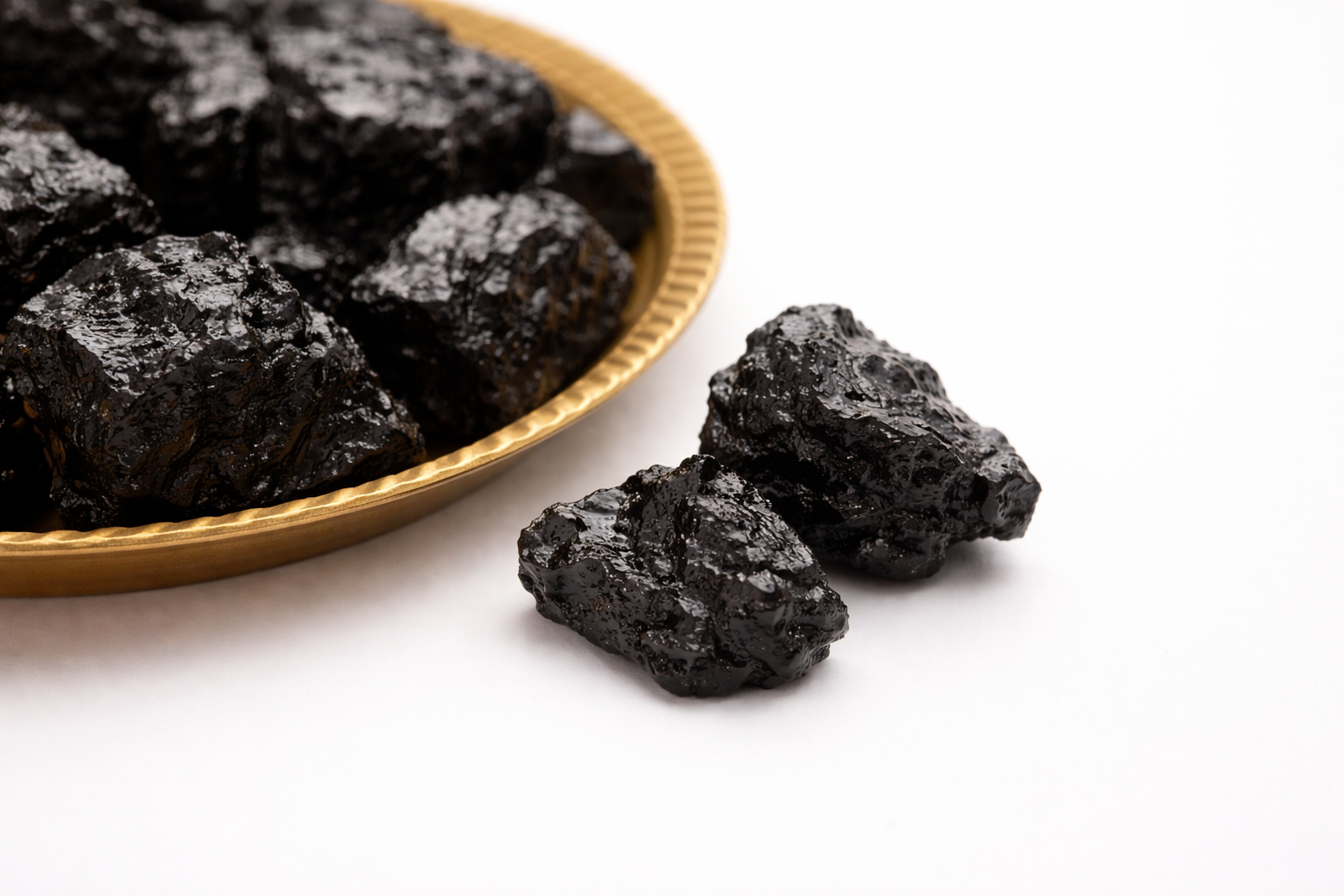
Shilajit is a dark brown to black resin that seeps from rock fissures in the Himalayas, Tibet and the Altai mountains. It is neither a plant nor a pure mineral, but a phytocomplex resulting from the slow decomposition of plant and microbial matter compressed over centuries under geological pressure. Plants such as Euphorbia royleana and Trifolium repens are often involved in this process. During warmer periods, the resin becomes more fluid and emerges at the surface, hence the traditional image of the “blood of the mountains.” This mode of formation explains a remarkable composition that is difficult to reproduce in the laboratory.
Biochemical composition
Shilajit’s value for clinicians lies in the combination of several classes of compounds.
- Fulvic acid and humic acids: they are the main drivers of its biological activity. High-quality extracts are generally standardized to more than 50% fulvic acid. Fulvic acid acts as a powerful natural chelator and facilitates the transport of minerals in ionic form into cells.
- Minerals and trace elements: Shilajit contains more than 84 minerals in ionic form, including iron, selenium, zinc, magnesium, copper and potassium. This profile makes it an interesting support in broad-spectrum remineralization strategies.
- Other bioactive compounds: dibenzo-α-pyrones and their chromoproteins contribute to mitochondrial protection and antioxidant effects, and Shilajit also provides phospholipids, triterpenes and phenolic acids.
Role in Ayurvedic medicine
In Ayurveda, Shilajit is classified as a Rasayana, a regenerating tonic that supports longevity and slows aging. It is also considered a Yogavaha, a substance that enhances the effect of other plants or nutrients when used in combination. Historically, it has been used for fatigue, certain digestive issues, libido, fertility and maintenance of cognitive functions. Modern scientific literature is beginning to validate part of these traditional uses, although further research is still needed.
Main mechanisms of action
Nutrient absorption
Fulvic acid has a low molecular weight and can easily cross cell membranes. Inside the cell, it acts as a carrier for minerals and trace elements. This property may improve the absorption of minerals contained in Shilajit itself, as well as that of nutrients from food or other supplements. In practical terms, Shilajit can be considered as an adjunct in strategies aimed at correcting certain mineral insufficiencies or optimizing an existing nutritional protocol.
Mitochondrial support and ATP production
Acute or chronic fatigue is one of the most frequent reasons for consultation. Shilajit acts directly at the level of mitochondria, which are responsible for ATP production. The dibenzo-α-pyrones found in Shilajit appear to contribute to mitochondrial protection against oxidative stress. In parallel, the supply and transport of co-factors essential for the Krebs cycle, such as magnesium or iron, can support more efficient ATP production. Clinically, this may lead to improved perceived energy, better endurance and enhanced physical and mental recovery.
Adaptogenic effects and stress regulation
Shilajit is generally described as an adaptogen. It helps the body adapt to different types of stress by influencing the hypothalamic–pituitary–adrenal axis and cortisol regulation. By normalizing the stress response, it may help reduce certain anxiety-related symptoms, improve sleep quality and strengthen overall resilience to daily demands.
Potential health benefits
Vitality and chronic fatigue
One of the most studied areas concerns chronic fatigue and low energy. By acting on mitochondrial function, Shilajit can support approaches targeted at chronic fatigue syndrome or prolonged overwork states. Patients often report better endurance and increased vitality when Shilajit is integrated into a comprehensive management plan.
Cognitive function and memory
Shilajit’s neuroprotective potential is also documented. Fulvic acid appears capable of inhibiting tau protein aggregation, a process involved in certain neurodegenerative diseases. Its antioxidant properties also offer protection against neuronal oxidative stress. In practice, this may translate into improvements in memory, concentration and mental clarity, and supports its potential role in long-term cognitive support strategies.
Male health and hormonal profile
Regarding male health, a key study showed that supplementation with 250 mg of purified Shilajit twice daily for 90 days led to a significant increase in total testosterone levels in healthy men. Combined with its effects on energy and circulation, these results support its potential use for libido, physical performance and fertility, within a supervised approach.
Bone health and inflammation
Shilajit’s rich mineral content, together with improved absorption, can support bone remodeling processes and contribute to osteoporosis prevention strategies. Fulvic and phenolic acids also contribute to an anti-inflammatory action, which makes Shilajit relevant in the context of chronic joint discomfort or low-grade inflammatory conditions.
Practical integration in nutrition
Available forms
Shilajit is available in several forms, each with specific advantages.
• Resin: traditional, concentrated form, to be dissolved in water or a warm liquid.
• Powder: obtained by drying the resin, easier to handle, provided purity is guaranteed.
• Capsules or tablets: generally contain a standardized extract, convenient for precise dosing in clinical settings.
Dosage and recommendations
There is no single standard dose, as fulvic acid content and overall concentration vary between extracts. Most clinical studies use doses between 250 and 500 mg of purified Shilajit per day, often divided into two intakes. From a professional standpoint, it is appropriate to start with the lowest dose recommended by the manufacturer, for example 250 mg per day, to monitor tolerance over several weeks, then adjust if necessary. Morning intake on an empty stomach is often preferred to support absorption.
Possible synergies with Ashwagandha
In Ayurveda, Shilajit is often combined with other plants. One of the most common pairings is with Ashwagandha, an adaptogen recognized for its effects on stress, sleep and adrenal function. Together, Shilajit and Ashwagandha offer global support for energy, stress management and recovery. The key point for practitioners remains extract quality: standardization, purity and traceability must be equally stringent for both ingredients.
Quality and safety
Quality requirements
Purity is the most sensitive point. In its raw state, Shilajit may be contaminated with mycotoxins, free radicals and heavy metals such as lead, mercury or arsenic from the surrounding rock environment. For professional use, it is essential to recommend only products that:
• have undergone a documented purification process;
• are tested by independent third-party laboratories, with certificates of analysis available;
• guarantee a minimum fulvic acid concentration, for example above 50%;
• respect very low thresholds for heavy metals, in line with monographs and reference standards.
Raw Shilajit: a risk to avoid
Unpurified Shilajit should not be used. Risks related to the presence of heavy metals and other contaminants are real and may have long-term consequences, particularly on the nervous system. Trust in the supplier, transparency on purification processes and analytical results are essential prerequisites before any recommendation.
Precautions and contraindications
Main contraindications
Certain clinical situations require caution or avoidance:
• Hemochromatosis, due to iron content.
• Active gout, with a risk of raised uric acid levels.
• Pregnancy and breastfeeding, due to insufficient safety data.
• Children, as safety has not been established in this population.
Possible interactions
Because of its effects on metabolism and the hormonal axis, Shilajit may interact with some treatments, particularly:
• diabetes medications, due to a possible impact on blood glucose;
• antihypertensive treatments;
• thyroid medications;
• anticoagulants.
In all cases, Shilajit should be integrated into a comprehensive approach that takes into account the patient’s full clinical profile and ongoing therapies.
Conclusion
Shilajit is a traditional phytocomplex whose mechanisms are increasingly understood and documented, with promising perspectives in managing fatigue, supporting cognitive function, improving vitality and addressing certain metabolic or inflammatory issues. For health professionals, it is not a miracle solution but a tool that only makes sense if extract quality, standardization and safety are guaranteed. Clinical discernment remains central: rigorous supplier selection, demanding analytical traceability, verification of certificates of analysis and integration into individualized protocols. Under these conditions, Shilajit can find its place in a modern, high-standard clinical practice.
Access our Shilajit product page to view available grades and formats or request a quote
